-
Xinzhen Town Industrial Zone, Wen'an County, Langfang City, Hebei Province
Why Teardrop-Shaped Cable Tray Is Redefining Modern Cable Management Efficiency
Recent News
View Products
Contact Us
In modern electrical infrastructure design, cable management systems are expected to do far more than simply support wiring. They must also improve installation efficiency, reduce maintenance complexity, enhance airflow, and ensure long-term structural reliability under increasingly demanding operating conditions.
Among newer structural innovations in cable support systems, the teardrop-shaped cable tray has gained attention for its unique geometry-driven performance advantages. Unlike traditional ladder or perforated trays, its profile is engineered to optimize both mechanical strength and installation ergonomics.
This design is not just aesthetic—it is functional, performance-driven, and increasingly aligned with modern industrial engineering requirements.
Table of Contents
What Is a Teardrop-Shaped Cable Tray and Why Engineers Care
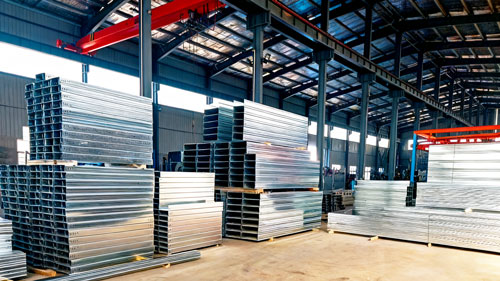
A teardrop-shaped cable tray is a specially designed cable support system that uses a rounded and tapered structural profile resembling a teardrop cross-section.
This geometry improves:
- Load distribution efficiency
- Structural rigidity
- Cable positioning stability
- Airflow around cable bundles
Unlike conventional rectangular or ladder systems, the teardrop shape reduces stress concentration points, allowing more even distribution of mechanical load across the structure.
According to general structural engineering principles used in lightweight metal design (as referenced in engineering material behavior studies from institutions such as ASCE and IEEE infrastructure research discussions), rounded structural profiles often perform better under distributed loads compared to sharp-edged geometries.
Why Cable Tray Geometry Matters More Than Most People Think
Most engineers initially focus on:
- Material type
- Load rating
- Coating or corrosion resistance
- Installation speed
However, geometry plays a critical role in long-term system performance.
The shape of a cable tray affects:
1. Load Distribution Efficiency
Sharp corners create stress concentration points. Rounded or tapered structures distribute force more evenly.
2. Cable Stability
Cable movement is reduced when the tray shape naturally guides cable positioning.
3. Airflow Dynamics
Open and curved geometries improve ventilation around cable bundles, reducing heat accumulation.
4. Installation Flexibility
Ergonomic shapes can simplify alignment and mounting during installation.
Key Advantages of Teardrop-Shaped Cable Tray Systems
1. Improved Structural Strength-to-Weight Ratio
The teardrop profile enhances rigidity without requiring excessive material thickness.
2. Better Cable Organization Under Load
Cables remain more stable even in vibration-prone environments.
3. Reduced Stress Concentration
The curved structure minimizes localized stress points that often lead to deformation in traditional trays.
4. Enhanced Aesthetic and Architectural Integration
In visible installations, the streamlined shape offers a cleaner industrial appearance.
Real-World Application Case: High-Density Infrastructure Facility
In a high-density infrastructure environment supporting both power and data distribution systems, engineers faced recurring issues with traditional tray systems:
- Cable congestion in long routing paths
- Localized tray deformation at support points
- Heat accumulation in densely packed sections
- Maintenance difficulty due to cable displacement
Engineering Decision
The design team introduced teardrop-shaped cable tray systems in high-load routing zones, particularly where cable density and vibration were highest.
Observed Outcomes
After implementation:
- Cable positioning stability improved significantly
- Structural deformation decreased under long-span loads
- Airflow around cable bundles improved thermal behavior
- Maintenance accessibility became more efficient
This aligns with engineering discussions frequently found in infrastructure-focused communities such as IEEE professional forums and industrial design groups on LinkedIn, where geometry-driven design optimization is a growing topic.
Teardrop-Shaped Cable Tray vs Traditional Systems
| Feature | Teardrop-Shaped Tray | Ladder Tray | Perforated Tray |
|---|---|---|---|
| Structural Efficiency | High | Medium | Medium |
| Load Distribution | Optimized | Standard | Standard |
| Cable Stability | High | Medium | Medium |
| Airflow Performance | Good | Excellent | Good |
| Installation Ergonomics | Improved | Standard | Standard |
This comparison shows that teardrop-shaped systems are not meant to replace all tray types but to optimize specific engineering scenarios.
Where Teardrop-Shaped Cable Tray Works Best

This system is particularly effective in environments requiring a balance of:
- Structural stability
- Cable organization
- Thermal control
- Long-span installation efficiency
Typical applications include:
- Industrial automation systems
- Data-intensive infrastructure
- Energy distribution facilities
- Transportation control systems
- Commercial building backbone cabling
Engineering Considerations for Proper Design
1. Load Distribution Planning
Even optimized geometry must follow proper load calculation standards.
2. Support System Integration
Proper spacing and mounting are essential for maintaining structural benefits.
👉 Cable Tray Support Design Mistakes to Avoid
👉 Stand Off Bracket Accessories for Cable Tray Systems
3. Cable Segmentation Strategy
Power and signal cables should still be separated where required for performance stability.
4. Thermal Management Awareness
Cable density must be evaluated to prevent overheating in enclosed sections.
Industry Standards and Engineering Insights
While teardrop-shaped cable trays are an emerging structural innovation, their design principles align with broader engineering frameworks such as:
- IEC 61537 cable tray system requirements
- IEEE infrastructure cable management guidelines
- Structural load distribution principles in mechanical engineering
- ASCE material efficiency studies in lightweight structural systems
Engineering discussions on platforms like IEEE Xplore and LinkedIn infrastructure groups increasingly highlight the importance of structural geometry in improving cable system performance.
Common Mistakes in Teardrop Cable Tray Applications
Mistake 1: Treating It Like a Standard Tray System
Geometry advantages are lost if installation is not optimized.
Mistake 2: Ignoring Load Path Design
Improper load distribution reduces structural benefits.
Mistake 3: Poor Support Alignment
Misalignment weakens system stability over long spans.
Mistake 4: Overloading Beyond Design Scope
Even optimized structures have engineering limits.
Internal System Integration
For a complete cable management system, teardrop-shaped trays are often combined with:
- Advantages of Steel Cable Trays in Industrial Projects
- Aluminum Cable Tray Selection Mistakes You Must Avoid
- Top Benefits of Cable Ladders for Industrial Wiring
Final Thoughts
The teardrop-shaped cable tray represents a shift in cable management design thinking—from simple structural support to geometry-optimized engineering performance.
By improving load distribution, enhancing cable stability, and optimizing airflow, it provides a modern solution for increasingly complex electrical infrastructure systems.
For engineers looking to improve system efficiency without sacrificing structural reliability, this design offers a practical and forward-looking option for next-generation cable management.
FAQ
What is a teardrop-shaped cable tray used for?
It is used for efficient cable management in systems requiring improved load distribution and structural stability.
How is it different from a ladder cable tray?
It uses a curved structural design that improves stress distribution and cable stability.
Is it suitable for industrial environments?
Yes, especially in high-density or vibration-prone installations.
Does it improve cable airflow?
Yes, the geometry supports better airflow around cable bundles.
Can it replace traditional cable trays?
It is best used as a complementary or optimized solution rather than a full replacement.
What industries use it most?
Industrial automation, infrastructure systems, energy facilities, and data-heavy environments.