-
Xinzhen Town Industrial Zone, Wen'an County, Langfang City, Hebei Province
Outdoor Cable Tray in 2026: Heat, Rain and Corrosion Design
Recent News
View Products
Contact Us
Table of Contents
Introduction
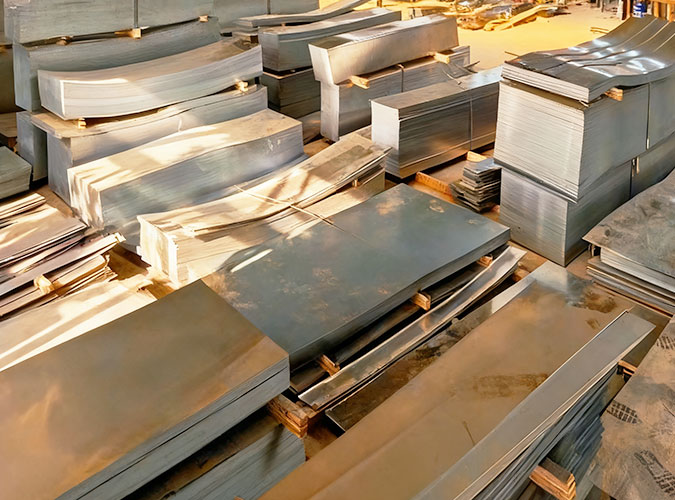
An outdoor cable tray operates in a very different environment from a tray installed inside a controlled technical room. Rain, condensation, temperature cycling, ultraviolet exposure, airborne contaminants, wind, debris, and long-term corrosion can all affect the tray, its supports, its fittings, and the cables it carries.
This is why outdoor cable tray selection should not begin with one question such as “Which material is corrosion resistant?” A tray may use a durable material and still perform poorly if water collects inside the route, supports use incompatible hardware, thermal movement is ignored, or cable covers create unintended drainage and ventilation problems.
Outdoor cable management works best when the tray is treated as part of an exposed structural system. Material, tray type, surface protection, drainage, support spacing, fittings, cable load, environmental exposure, expansion movement, and inspection access all need to work together.
For projects planned in 2026, this system-based approach is especially useful because electrical infrastructure increasingly needs to remain adaptable while operating under more demanding outdoor conditions. Instead of looking for one “best” outdoor cable tray, the more practical goal is to match the complete tray system to the actual exposure and cable-routing requirements.
This guide explains how to make that decision without oversimplifying outdoor performance.
What Makes an Outdoor Cable Tray Different?
An outdoor cable tray performs the same basic function as an indoor cable tray: it provides a structured pathway for supporting and organizing cables. The difference is that the surrounding environment becomes a much larger part of the design.
Indoors, temperature and moisture may remain relatively stable. Outdoors, the tray can experience repeated wet and dry cycles, direct sunlight, condensation, dust, wind, airborne contaminants, and large temperature changes over the course of its service life.
These conditions affect different parts of the system in different ways.
Moisture can contribute to corrosion on exposed metal surfaces and connection hardware. Water can also collect inside certain tray profiles if drainage is poor. Temperature changes can cause long straight runs to expand and contract. Sunlight may affect polymeric or composite materials depending on their formulation and UV resistance.
Wind creates another consideration because an outdoor tray, particularly one using covers or large surface areas, can be exposed to forces that would not exist in an indoor installation.
The surrounding support structure also experiences the same environment. A highly corrosion-resistant tray provides limited benefit if brackets, bolts, connectors, or anchors deteriorate much faster than the tray itself.
Outdoor design therefore begins with one important principle: environmental resistance belongs to the whole cable-support route, not only to the visible tray section.
Outdoor Cable Tray Materials and Corrosion Resistance
Material selection is one of the first decisions in outdoor cable tray design, but it should follow a clear understanding of the exposure.
The general process of corrosion involves deterioration of materials through interaction with their environment. For outdoor metal cable tray systems, the rate and form of deterioration can be influenced by moisture, contaminants, temperature, surface condition, deposits, and contact between different materials.
Galvanized steel is widely used where structural strength and corrosion protection are both required. Its zinc-based surface protection helps separate the underlying steel from the surrounding environment. The suitability of the coating depends on the exposure conditions, fabrication process, surface damage, and expected service environment.
Stainless steel provides corrosion resistance through the alloy itself and its passive surface behavior. It can be appropriate where moisture or contaminants create more demanding exposure, but stainless steel should not be described as completely corrosion-proof. Grade selection and environmental conditions still matter.
Aluminum provides another useful outdoor option because of its relatively low weight and natural oxide layer. Its reduced dead load can be particularly valuable when the support structure or installation handling is an important consideration.
FRP and other composite trays provide non-metallic alternatives. They can be attractive where corrosion exposure is severe or electrical non-conductivity is valuable, although resin formulation, UV stability, temperature conditions, fire performance, structural load, and support span should all be checked for the actual system.
The correct material is therefore not determined by whether the installation is simply “outdoor.” It is determined by what the tray is exposed to outdoors.
Galvanized Steel, Stainless Steel, Aluminum or FRP?
Different materials solve different outdoor cable-management problems, so a useful comparison should focus on engineering trade-offs rather than ranking one material above all others.
| Material | Outdoor strength | Main consideration | Suitable selection focus |
|---|---|---|---|
| Galvanized steel | Strong structural performance with surface corrosion protection | Coating condition and exposure severity | General outdoor structural cable routes |
| Stainless steel | Strong inherent corrosion resistance | Grade and environmental compatibility | Persistent moisture or demanding exposure |
| Aluminum | Low weight with useful corrosion resistance | Alloy, connections and structural loading | Lightweight exposed cable routes |
| FRP / composite | Non-metallic corrosion resistance | UV, resin, temperature and span performance | Corrosive or electrically sensitive environments |
Galvanized steel may be practical when the environment is exposed but not unusually aggressive and structural loading is important. Stainless steel becomes more relevant as corrosion conditions become more demanding or long-term material durability carries greater importance.
Aluminum can reduce tray self-weight and support demand, particularly on overhead routes. However, its load behavior still needs to be evaluated from the specific tray profile and support spacing.
FRP changes the material logic entirely because corrosion resistance does not depend on a metallic coating. At the same time, assumptions based on steel should not automatically be applied to FRP. Composite structural behavior and thermal expansion can differ considerably from metal systems.
The most professional specification identifies the actual environmental problem first and then selects the material whose performance characteristics address that problem.
Choosing the Right Outdoor Cable Tray Type

Material and tray structure are separate decisions.
An outdoor cable tray can use ladder, perforated, solid-bottom, wire-mesh, or other configurations depending on how the cables need to be supported and how much environmental exposure is acceptable.
Ladder tray leaves large open areas around the cables. This can improve ventilation and drainage while making inspection easier. It is often useful for larger cable routes where continuous bottom support is not required.
Perforated trays provide broader cable support while retaining openings for airflow and water drainage. They can suit cable groups that benefit from a more continuous base than a ladder tray provides.
Solid-bottom trays create greater separation between the cables and the area beneath the tray. Outdoors, however, drainage becomes particularly important because a closed base can collect water if the route and openings are not designed appropriately.
Wire-mesh systems provide high openness and easy cable visibility for suitable cable groups. Outdoor suitability depends on material, surface treatment, cable loading, structural supports, and the severity of environmental exposure.
The wider range of cable tray systems shows why outdoor selection should combine tray structure with material rather than treating “outdoor cable tray” as one product category.
The best structure is the one that supports the cables appropriately while handling water, airflow, physical exposure, and maintenance requirements.
Rain and Drainage Are Design Issues, Not Minor Details
Rain exposure is one of the clearest differences between indoor and outdoor cable tray installation, yet drainage is sometimes considered only after the tray type has already been selected.
Open ladder trays naturally allow water to pass through most of the structure. Perforated trays also provide drainage through openings, although the actual drainage behavior depends on hole pattern, tray orientation, cable density, and installation angle.
Solid-bottom systems need more deliberate attention.
If water enters the tray and has no practical path to leave, moisture can remain around cables, fittings, fasteners, and debris for much longer than expected. Covers do not automatically eliminate this issue because wind-driven rain or condensation can still introduce moisture.
The route itself can also create low points.
A tray that appears level in design documentation can develop localized areas where water collects because of installation tolerances, structural deflection, fittings, or changes in elevation.
Drainage should therefore be considered throughout the route rather than only in straight tray sections.
Bends, tees, reducers, covers, vertical transitions, and cable exits can all influence where water travels.
A reliable outdoor cable tray design does not assume that water can be completely prevented from reaching the system. It considers what happens after water arrives.
Should an Outdoor Cable Tray Use a Cover?
Cable tray covers can provide useful protection, but they should not be treated as an automatic outdoor requirement.
A cover can reduce direct exposure to sunlight, falling debris, or certain forms of precipitation. It can also provide an additional physical barrier where the cable route is exposed from above.
At the same time, adding a cover changes the tray environment.
Air movement around the cable bundle may be reduced. Water or condensation can become trapped if drainage is poor. Wind can also act on the larger enclosed surface, increasing the forces transferred into cover fasteners, tray sections, and supports.
The decision should therefore start with the hazard the cover is intended to address.
If the main concern is direct falling debris, a top cover may provide useful protection. If ventilation is critical, an open ladder route may be preferable. If water exposure is the primary issue, material selection and drainage may matter more than simply adding a cover.
Cover fastening deserves particular attention outdoors.
A cover that is secure in a controlled indoor environment may experience very different conditions under wind and repeated thermal cycling.
Covers should therefore be treated as structural and environmental components of the outdoor cable tray system rather than optional decorative accessories.
Heat, Sunlight and Thermal Expansion
Outdoor cable trays can experience significant changes in temperature between operating conditions, weather cycles, and direct sunlight exposure.
The tray material expands as temperature rises and contracts as temperature falls. Over a short section, the movement may be relatively small, but across a long continuous route the accumulated dimensional change can become more important.
Different materials have different thermal expansion characteristics.
This matters particularly where one tray material connects to another structure or where long runs are rigidly constrained at many points.
Expansion provisions may therefore be necessary depending on tray length, material, temperature range, fittings, joints, and manufacturer requirements.
Cable behavior should also be considered.
A tray exposed to direct sunlight can become warmer than the surrounding air, while densely installed cables may generate heat during operation. Covers and solid-bottom construction can further change the thermal environment around the cable bundle.
The open structure of a ladder or mesh tray can support airflow, but tray openness should not be treated as a substitute for electrical cable-loading calculations.
UV exposure is another material consideration.
Metal trays are affected differently from polymeric and composite materials. For FRP or other non-metallic systems, the suitability of the resin and surface protection for long-term UV exposure should be confirmed rather than assumed.
Outdoor thermal design therefore connects material movement, cable temperature, tray structure, sunlight, and support conditions.
Wind Changes the Structural Design
Wind is easy to overlook because cable trays are not usually considered large outdoor structures. In exposed installations, however, tray geometry can create meaningful wind loading.
An open ladder tray generally presents less continuous surface area to the wind than a covered or solid system. A tray with a cover can behave differently because the cover creates a broader surface for wind pressure and uplift.
The effect becomes more important on elevated routes, exposed structural frameworks, long outdoor corridors, and installations where the tray is not shielded by surrounding construction.
Support design should therefore consider more than downward cable weight.
Brackets and anchors may need to resist lateral or uplift forces depending on the configuration and exposure.
The same applies to covers and their fastening systems. A cover that is inadequately restrained can become a weak point in an otherwise strong cable tray route.
Wind can also interact with vibration.
A lightly loaded exposed tray or cover may respond differently from a heavily loaded system, especially across longer spans.
This is why outdoor cable tray support design should consider environmental forces together with cable load, span, brackets, anchors, and structural attachment points.
A robust outdoor tray is not only capable of carrying cables downward. It is capable of remaining stable under the complete set of forces expected at its installation location.
Support Spacing for Outdoor Cable Tray
Support spacing remains one of the most important structural decisions in any cable tray installation.
Outdoors, the decision becomes more complex because the supports themselves experience temperature changes, moisture, corrosion exposure, wind, and sometimes vibration.
The tray load includes the weight of the tray, cables, fittings, covers where used, and other approved components. Wider trays can eventually carry significantly more cable weight as new circuits are added.
Increasing the distance between supports changes the structural demand on the tray rails or base.
This means support spacing should follow the load performance of the specific tray configuration rather than a generic outdoor rule.
Environmental durability of the support system matters just as much.
A stainless tray combined with poorly protected steel brackets can create an inconsistent service life. Similarly, corrosion-resistant supports can still fail to perform properly if their anchors are installed into an unsuitable structural location.
Drainage and inspection should also influence support layout.
Brackets should not create unnecessary water traps, and connections should remain accessible enough that corrosion, loosening, or movement can be identified during maintenance.
The outdoor cable tray and the support structure should therefore be specified as one coordinated assembly.
Material Compatibility at Joints and Supports
Outdoor exposure makes material compatibility more important because moisture can remain present around connections and contact surfaces.
When different metals are used together, their interaction in the presence of an electrolyte such as water can influence corrosion behavior. The actual risk depends on the materials, surface area relationship, exposure, coatings, and connection details.
This does not mean that different materials can never be used together.
It means transitions should be intentional.
Tray sections, connectors, fasteners, brackets, and support hardware should be selected with awareness of how the materials behave in the same environment.
Protective coatings also need continuity.
A galvanized tray that is cut or drilled during field installation may expose areas that differ from the original factory-finished surface. Coated tray systems can experience similar issues where installation damages the protective layer.
Stainless systems require appropriate fabrication practices to reduce contamination from ordinary steel tools or particles.
Aluminum connections also deserve attention where dissimilar metals are present.
Outdoor cable tray reliability is often determined by these relatively small details rather than by the large straight tray sections that attract most of the design attention.
Cable Load and Future Outdoor Expansion
Outdoor routes often serve infrastructure that expands over time.
Additional equipment can introduce new power, control, communication, or monitoring cables. A tray that begins with substantial spare width can gradually become much more heavily loaded.
Physical capacity and structural capacity should therefore be tracked separately.
A tray may still have visible empty space while its support system is approaching the load condition assumed during design.
Future additions also affect wind and environmental behavior when covers, dividers, or additional components are introduced.
Cable organization becomes important as well.
Adding cables wherever open space remains can make drainage, ventilation, inspection, and maintenance more difficult. Abandoned cables may continue occupying space and adding structural weight long after they are no longer active.
A more sustainable expansion strategy periodically reviews what the tray currently carries rather than assuming every future cable should simply be added to the existing route.
Where major expansion is expected, a parallel tray or planned branch route may sometimes provide a cleaner solution than continuously filling one outdoor cable tray to its practical limit.
Outdoor Cable Tray Fittings Need Equal Protection
Straight tray sections are only part of an outdoor cable route.
Elbows, tees, crosses, reducers, connectors, splice plates, covers, and vertical transitions are exposed to the same weather as the tray itself.
These fittings can actually experience more complex conditions because they contain additional joints, overlapping surfaces, fasteners, and changes in geometry.
Water can collect differently around a horizontal bend than along a straight tray. A reducer can create localized areas where debris accumulates. Covers around tees and crosses require careful fitting to prevent unstable or poorly drained details.
Cable bending requirements remain important as well.
Outdoor durability does not compensate for an elbow that forces a large cable into an unsuitable radius.
Fitting material should also remain compatible with the straight tray sections and support system.
Specifying a highly durable tray while using lower-resistance fittings creates a route whose service life may be controlled by its weakest components.
Outdoor design should therefore review fittings as part of the environmental system rather than treating them as generic accessories added after the main tray is selected.
Grounding and Bonding for Metallic Outdoor Trays
Metallic outdoor cable tray systems can involve grounding and bonding requirements depending on the electrical design and applicable requirements of the installation.
The outdoor environment adds another reason to give connections careful attention.
Moisture, corrosion, surface treatments, loose hardware, expansion joints, and dissimilar materials can influence the electrical continuity of a metallic route.
It should not be assumed that mechanical connection automatically provides whatever electrical performance the system requires.
Where bonding continuity is part of the design, joints and fittings need to be coordinated accordingly.
Expansion sections are especially relevant because a route may need to accommodate movement while maintaining the required electrical relationship between sections.
Non-metallic trays create a different situation. FRP systems do not behave electrically like steel or aluminum, so the grounding strategy should reflect the material rather than copying assumptions from metallic tray systems.
Electrical design and mechanical tray design should therefore remain coordinated throughout the outdoor route.
Common Outdoor Cable Tray Design Mistakes
One of the most common mistakes is defining the environment simply as “outdoor” and assuming that description is sufficient for material selection.
Outdoor environments can differ dramatically in moisture, contaminants, temperature cycling, sunlight, wind, debris, and maintenance conditions.
Another mistake is selecting corrosion-resistant tray sections while giving much less attention to supports and fasteners.
If brackets, connectors, or anchors deteriorate faster than the tray, the durability of the main tray material cannot protect the complete system.
Water management is another frequent weakness.
A covered or solid-bottom outdoor cable tray can appear highly protected while actually creating locations where condensation or rainwater remains trapped.
Wind can also be underestimated, especially when covers are installed.
A cover changes the exposed surface of the tray and should be considered in the support and fastening design.
Thermal movement is sometimes ignored on long outdoor runs. Repeated expansion and contraction can place stress on joints and supports if the route is overly constrained.
Finally, outdoor tray capacity is often judged visually. Remaining space does not necessarily mean remaining structural capacity, particularly after years of cable additions.
Reliable design avoids these mistakes by evaluating environment, structure, cable loading, and maintenance as connected issues.
Inspection and Maintenance in Outdoor Environments
Outdoor cable tray maintenance should focus on changes that develop gradually.
Corrosion, loose connections, coating damage, support movement, water accumulation, debris, cable displacement, and cover damage may not create immediate failure, but they can reduce system reliability over time.
Inspection frequency should reflect the actual exposure and operating conditions.
A protected outdoor route may not require the same attention as one exposed directly to severe weather or contaminants.
Joints and supports deserve particular attention because they combine structural loading with environmental exposure.
Drainage points should remain clear, and debris should not be allowed to accumulate in ways that trap moisture around cables or metal surfaces.
Covers should be checked for secure fastening and deformation.
Cable additions should also be reviewed.
A route that has changed significantly since installation may no longer match the load, ventilation, or cable-organization assumptions used in the original design.
Maintenance is therefore not simply a matter of checking whether the tray has rusted. It is a review of whether the complete outdoor cable tray system still performs the structural, environmental, and cable-management function for which it was installed.
How to Specify an Outdoor Cable Tray More Reliably

A useful outdoor specification should describe performance conditions rather than relying only on material and dimensions.
The cable schedule establishes the required routing space and load. Environmental information defines corrosion, moisture, UV, temperature, and weather exposure. Structural information establishes realistic support positions and spans.
The tray type can then be matched to the cable requirements.
Ladder systems may be favored where drainage and ventilation are important. Perforated trays can provide broader support while retaining open areas. Solid-bottom trays may be appropriate where greater separation is required, provided drainage and thermal conditions are addressed.
Material selection follows the exposure.
Support and fitting materials should then be coordinated with the tray so that one weak component does not undermine the environmental strategy.
Long runs should be reviewed for temperature movement. Covered systems should be checked for wind, drainage, and ventilation. Maintenance access should remain available around joints, brackets, and fittings.
This process produces a more useful specification than simply writing “outdoor stainless cable tray” or “weather-resistant cable tray” without explaining what conditions the system actually needs to withstand.
Conclusion
An outdoor cable tray is not simply an indoor tray made from a more durable material.
Outdoor performance depends on the interaction between tray type, material, corrosion protection, drainage, sunlight, temperature movement, wind, cable load, fittings, supports, and maintenance access.
Galvanized steel, stainless steel, aluminum, and FRP can all be appropriate in different conditions. Likewise, ladder, perforated, solid-bottom, and mesh structures each create different balances between support, drainage, ventilation, and physical protection.
The strongest design begins by defining the environment and the cable route before selecting the tray.
When environmental exposure, structural loading, water management, material compatibility, and future cable expansion are considered together, an outdoor cable tray can remain accessible and structurally reliable without depending on a single material or protective feature to solve every problem.
FAQ
What type of cable tray is best for outdoor use?
There is no single outdoor cable tray that is best for every environment. Selection depends on moisture, corrosion exposure, UV, temperature, wind, cable load, drainage, and support conditions. Galvanized steel, stainless steel, aluminum, and FRP can each be appropriate when matched to the actual service environment.
Does an outdoor cable tray need a cover?
Not always. Covers can reduce direct exposure to rain, sunlight, debris, or falling objects, but they can also affect airflow, drainage, and wind loading. The decision should be based on the specific environmental hazard rather than assuming every outdoor cable tray automatically requires a cover.
How do you prevent corrosion on an outdoor cable tray?
Corrosion control begins with choosing a suitable tray material and surface protection for the exposure. Compatible fittings, supports, and fasteners are equally important. Good drainage, controlled field modifications, removal of trapped debris, and regular inspection also help maintain long-term outdoor performance.
Can FRP cable tray be installed outdoors?
FRP cable tray can be suitable for outdoor installations when the selected resin system, UV resistance, temperature performance, structural capacity, and support spacing match the environment. Because composite behavior differs from metal, specifications should follow the performance data of the actual FRP tray system.
What should be checked when installing an outdoor cable tray?
Check tray material, cable load, support span, brackets, anchors, drainage, fittings, thermal movement, wind exposure, material compatibility, cable bending, and maintenance access. Covers and long exposed routes may need additional attention because they can change wind, water, and expansion conditions.