-
Xinzhen Town Industrial Zone, Wen'an County, Langfang City, Hebei Province

Aluminum Cable Tray Selection Mistakes You Must Avoid
Recent News
View Products
Contact Us
If you’ve ever had to redo a cable installation, deal with overheating cables, or face unexpected maintenance costs, you already know one truth: cable management decisions made early in a project can either save you years of trouble or create problems that compound over time.
When you choose an aluminum cable tray, you are not just selecting a support structure. You are defining how your entire electrical system will perform under real-world conditions—heat, load, expansion, environmental stress, and operational changes.
What most buyers don’t realize is that failures in cable tray systems rarely happen immediately. They develop slowly—through minor miscalculations, overlooked environmental factors, or compromises made during procurement.
This guide is written to help you avoid those mistakes.
By the end of this article, you will not only understand how to select the right aluminum cable tray, but you will also gain practical insight into how real projects succeed—or fail—based on these decisions.
Table of Contents
Why Aluminum Cable Tray Is Becoming the Preferred Choice
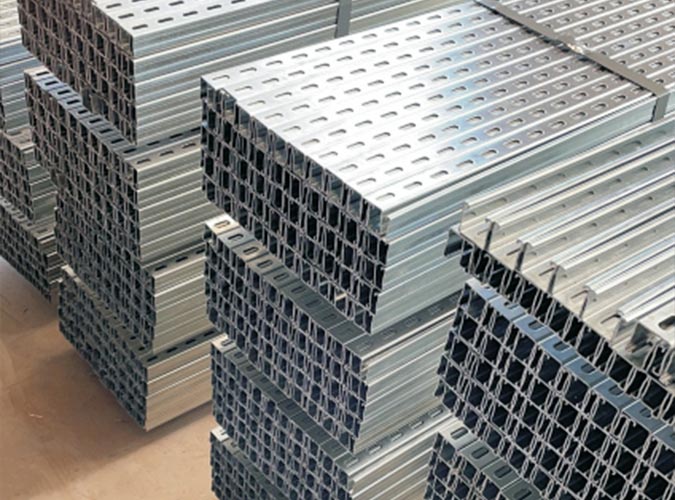
Over the past decade, aluminum cable tray systems have moved from being an alternative option to a preferred solution in many industries.
The reason is not just cost—it’s performance efficiency.
According to data published in technical bulletins from cable management engineering associations, aluminum cable tray systems can reduce installation labor time by up to 40% compared to traditional conduit systems. This is largely due to their open design and lightweight structure.
Key Performance Advantages
- Aluminum weighs approximately one-third of steel, significantly reducing structural load
- Natural oxide layer provides corrosion resistance without additional coatings
- Thermal conductivity improves heat dissipation, reducing cable temperature buildup
- Modular design allows easy expansion and modification
- Lower lifecycle cost despite moderate upfront pricing
In high-density cable environments, heat dissipation is critical. Research from electrical installation studies shows that improved airflow in open tray systems can reduce cable operating temperature by 5–15%, which directly extends cable lifespan.
Understanding Aluminum Cable Tray Materials in Depth
Not all aluminum cable trays are the same. One of the most overlooked aspects is alloy selection and manufacturing quality.
Common Aluminum Grades Used
| Alloy Type | Key Characteristics | Typical Application |
|---|---|---|
| 6061-T6 | High strength, good corrosion resistance | Heavy-duty industrial |
| 6063-T6 | Excellent finish, moderate strength | Commercial installations |
| 5052 | Superior corrosion resistance | Marine or chemical environments |
The difference between these alloys can directly affect:
- Load capacity
- Resistance to environmental damage
- Long-term structural integrity
A poorly chosen alloy may look identical at installation but behave very differently after years of exposure.
Mistake 1: Treating Aluminum Cable Tray as a Commodity Product
Many buyers assume that all aluminum cable trays are interchangeable. This assumption leads to poor decisions.
In reality, differences in:
- Material grade
- Structural design
- Welding quality
- Dimensional accuracy
can dramatically impact performance.
Engineering Insight
Load-bearing performance depends not just on material thickness, but on structural geometry. Ladder rung spacing, side rail height, and connection design all influence strength.
A tray with inferior design may fail even if the material appears sufficient.
Mistake 2: Miscalculating Load and Ignoring Dynamic Conditions
Load calculation is not just about static cable weight.
You must consider:
- Initial cable load
- Future expansion (typically 25–50% additional capacity recommended)
- Environmental factors such as vibration
- Thermal expansion
According to engineering installation guidelines, cable trays should not exceed 75% of their rated capacity under normal operating conditions.
Failure to follow this guideline often leads to:
Increased maintenance frequency
Tray deformation
Support failure
Practical Tip
Always plan for at least 20–30% extra capacity. This allows for future expansion and prevents overloading.
Mistake 3: Ignoring Thermal Performance
Heat is one of the most underestimated factors in cable tray design.
Cables generate heat during operation, and without proper dissipation, this can lead to insulation degradation and reduced system efficiency.
Why Aluminum Performs Better
Aluminum has a thermal conductivity of approximately 205 W/m·K, compared to steel at around 50 W/m·K.
This means aluminum dissipates heat roughly four times more efficiently.
Practical Impact
- Lower cable operating temperatures
- Reduced risk of overheating
- Extended cable lifespan
In high-load systems, this difference can significantly improve reliability.Mistake 4: Incorrect Tray Type Selection
Each type of aluminum cable tray serves a specific purpose.
Choosing the wrong type can create hidden inefficiencies.
| Tray Type | Ventilation | Protection | Load Capacity | Best Use |
|---|---|---|---|---|
| Ladder | Excellent | Low | High | Power cables |
| Perforated | Good | Moderate | Medium | General use |
| Solid Bottom | Low | High | Medium | Sensitive cables |
Engineering Recommendation
For power-intensive systems, ladder trays are typically the best choice due to superior airflow.
For environments requiring protection from dust or debris, perforated or solid trays may be more suitable.Mistake 5: Underestimating Environmental Impact
Aluminum is corrosion-resistant, but environmental conditions still matter.
Environmental Factors to Consider
- Humidity levels
- Chemical exposure
- UV exposure
- Temperature fluctuations
In highly corrosive environments, even aluminum may require additional surface treatment.
Case Study
In a chemical processing facility, untreated aluminum trays showed surface wear after prolonged exposure. Switching to coated aluminum increased system lifespan by over 30% and reduced maintenance frequency.
Mistake 6: Poor Installation Planning and Execution

Even a high-quality aluminum cable tray system can fail if installed incorrectly.
Critical Installation Factors
- Support spacing (typically 1.5–3 meters depending on load)
- Proper alignment of tray sections
- Secure fastening and connections
- Allowance for thermal expansion
Improper installation often leads to:
- Long-term deformation
- Uneven load distribution
- Structural stress
Mistake 7: Lack of Expansion Planning
Cable systems rarely remain static.
Over time, additional cables are added due to:
- System upgrades
- Increased capacity requirements
- New equipment integration
If your tray system is not designed for expansion, you will face:
- Overcrowded trays
- Increased heat buildup
- Costly retrofits
Best Practice
Design for at least 30% additional capacity from the beginning.
How to Choose the Right Aluminum Cable Tray System
To avoid all these mistakes, you should focus on a structured decision process.
Step-by-Step Approach
- Define your application (industrial, commercial, data center)
- Calculate load requirements and future expansion
- Select the appropriate tray type
- Evaluate environmental conditions
- Choose a reliable manufacturer
- Plan installation layout carefully
When you follow this process, your system becomes more reliable, scalable, and cost-effective.
Advanced Design Considerations for Aluminum Cable Trays
To achieve optimal performance, consider advanced engineering factors.
Structural Design
- Side rail height affects load capacity
- Rung spacing impacts cable support
- Reinforcement improves durability
Electrical Considerations
- Grounding requirements
- Electromagnetic compatibility
- Separation of power and data cables
Safety Compliance
Follow relevant standards such as:
- IEC cable management guidelines
- NEMA VE-1 standards for cable trays
These standards ensure safety, reliability, and compliance with industry expectations.
Lifecycle Cost Analysis: Why Aluminum Wins Long-Term
Many buyers focus on upfront cost, but lifecycle cost tells the real story.
| Cost Factor | Steel Tray | Aluminum Cable Tray |
|---|---|---|
| Initial Cost | Lower | Moderate |
| Installation Cost | Higher | Lower |
| Maintenance | Higher | Lower |
| Lifespan | 10–15 years | 20–25 years |
| Corrosion Resistance | Moderate | High |
Over a 20-year period, aluminum cable trays often provide better total value due to reduced maintenance and longer lifespan.
Real Project Example: Industrial Facility Upgrade
In a large industrial upgrade project:
- Original system used steel trays
- Frequent corrosion required maintenance every 2–3 years
After switching to aluminum cable trays:
- Maintenance cycles extended to 5+ years
- Installation time reduced by 35%
- Overall project cost decreased despite higher material cost
This demonstrates how material choice impacts long-term efficiency.
Final Thoughts
Choosing the right aluminum cable tray is not about selecting a product—it is about designing a system that will perform under real-world conditions for decades.
When you take into account load requirements, environmental factors, material quality, and installation practices, you move from short-term decision-making to long-term system planning.
If you approach this process carefully, you will not only avoid common mistakes but also build a cable management system that delivers reliability, efficiency, and scalability.
And in today’s complex electrical environments, that is exactly what you need.
FAQ
What is an aluminum cable tray used for?
An aluminum cable tray is used to support and organize electrical cables in industrial, commercial, and infrastructure projects.
Is aluminum cable tray better than steel?
It depends on your application. Aluminum is lighter and corrosion-resistant, while steel may offer higher strength for extremely heavy loads.
How long does an aluminum cable tray last?
With proper installation and maintenance, aluminum cable trays can last over 20 years.
Can aluminum cable trays be used outdoors?
Yes, they are highly suitable for outdoor use due to natural corrosion resistance.
How do I calculate the load capacity?
You need to consider cable weight, tray span, and safety margins. Manufacturer load charts are essential.
Are aluminum cable trays suitable for heavy cables?
Yes, especially ladder-type trays designed for industrial applications.