-
Xinzhen Town Industrial Zone, Wen'an County, Langfang City, Hebei Province

Advantages of Using Steel Cable Trays in Industrial Projects
Recent News
View Products
Contact Us
Proper cable management is a cornerstone of any industrial project. From power distribution to control systems, a well-designed cabling infrastructure ensures safety, efficiency, and long-term reliability. Among the various options available, the steel cable tray stands out as a robust and versatile solution for managing complex cabling systems. Its durability, load-bearing capacity, and adaptability make it the preferred choice for heavy-duty industrial environments. In this article, we explore the advantages of using steel cable trays, their types, installation considerations, and maintenance best practices.
Table of Contents
Introduction

A steel cable tray is a structural system designed to support insulated electrical cables. Unlike conduits, which encase cables entirely, cable trays provide open pathways that allow for airflow, easier installation, and future modifications. Using a steel cable tray in industrial projects ensures that cables remain organized and accessible, while also reducing the risk of overheating.
The materials used for steel cable trays typically include galvanized steel, stainless steel, or powder-coated steel. Each option provides varying levels of corrosion resistance and durability, which can be selected based on the environmental conditions of the installation site.
Effective cable management is not only about organization; it directly impacts operational efficiency and safety. Properly installed steel wire trays can reduce the likelihood of electrical faults, minimize downtime, and prolong the lifespan of the installed cables. Studies from industrial infrastructure reports show that systems using well-planned steel cable tray layouts experience up to 20% fewer maintenance issues compared to unstructured cabling methods.
Types of Steel Cable Trays
Steel cable trays come in several designs, each tailored for specific use cases in industrial settings.
Ladder Steel Cable Trays
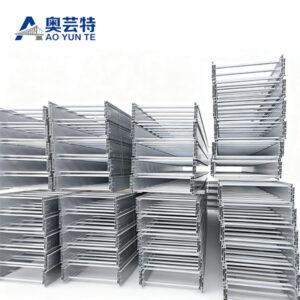
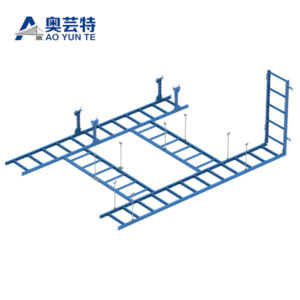
Ladder-style trays consist of two longitudinal side rails connected by evenly spaced rungs, resembling a ladder. This design provides high load-bearing capacity, making it ideal for supporting heavy power or control cables. The open rung structure allows for excellent ventilation, reducing heat buildup in high-density installations.
Perforated Steel Cable Trays
Perforated trays have a solid base with regularly spaced holes. They are suitable for medium-weight cable applications and provide good airflow while protecting cables from smaller debris. Perforated trays are commonly used in installations that require a balance between cable support and flexibility.
Solid Bottom Steel Cable Trays
These trays feature a continuous base without openings. Solid bottom trays are ideal for sensitive or smaller cables that require additional protection from dust, moisture, or accidental contact. Although they provide less ventilation than ladder trays, they ensure maximum cable safety in controlled environments.
Key Advantages of Steel Cable Trays
Steel cable trays offer numerous benefits for industrial projects, which is why they are widely adopted across various industries.
- High Load-Bearing Capacity
Steel cable trays can support large bundles of power or control cables without sagging. According to manufacturer load charts, ladder-style steel trays can handle up to 150 kilograms per meter, depending on material and rung spacing. - Durability in Harsh Environments
With options such as galvanized or stainless steel, cable trays resist corrosion, chemical exposure, and mechanical stress. This durability makes them suitable for factories, plants, and other demanding industrial environments. - Ease of Inspection and Maintenance
The open design allows technicians to inspect cables for damage, reroute wiring, or add new cables without dismantling the system. This feature significantly reduces downtime during maintenance operations. - Flexibility for Large Projects
Steel cable trays can be manufactured in a range of widths, rung spacing, and coatings. This modularity enables future expansions or modifications with minimal disruption to existing systems. - Improved Airflow and Heat Dissipation
Overheating is a major concern in high-density cabling. Ladder-style steel trays promote natural airflow around cables, preventing excessive temperature buildup and prolonging cable life. - Safety and Code Compliance
Using steel cable trays aligns with electrical safety standards for industrial installations. Their robust structure helps protect cables from physical damage and electrical hazards.
Steel Cable Trays vs Alternative Systems
Choosing a steel wire tray often involves comparing it with other cable management options, such as aluminum trays, wire mesh trays, and conduits.
| Feature | Steel Cable Tray | Aluminum Cable Tray | Wire Mesh Tray | Conduit |
|---|---|---|---|---|
| Load Capacity | High, suitable for heavy cables | Moderate, lighter load | Light to medium | Medium, depends on type |
| Durability | High, resists corrosion and impact | Moderate, corrosion-sensitive | Moderate, can bend under load | High, fully enclosed |
| Ventilation | Excellent in ladder trays | Good | Moderate | Limited |
| Maintenance | Easy access for inspection | Moderate | Easy access but less support | Harder to modify after installation |
| Cost | Moderate to high | Moderate | Low | Moderate to high |
| Installation | Requires planning and support spacing | Easier to handle | Very flexible and fast | Labor-intensive |
| Typical Applications | Industrial, high voltage | Medium-duty projects | Data centers, commercial | Critical power, outdoor routing |
This table highlights why steel wire trays are preferred in industrial applications. Their combination of strength, durability, and airflow performance is difficult to match with alternative systems, especially in projects involving heavy-duty or high-voltage cabling.
Installation Considerations for Industrial Projects
Installing steel wire trays requires careful planning to ensure safety and functionality. Here are some best practices:
- Proper Support and Bracket Placement: Install brackets or hangers at recommended intervals to prevent sagging and ensure even load distribution.
- Bending and Transition Points: Use elbows, tees, and transitions to maintain smooth cable paths and reduce strain.
- Safety Precautions: Always follow electrical codes and use protective equipment during installation.
- Common Mistakes to Avoid: Overloading trays, uneven rung spacing, and insufficient clearance can lead to cable damage or operational issues.
By following these guidelines, installations can maintain reliability and reduce maintenance costs over the lifespan of the system.
Maintenance and Inspection Tips
Even the most robust steel cable tray requires periodic inspection and maintenance:
- Check for corrosion, especially in humid or chemically aggressive environments.
- Remove dust and debris to maintain proper airflow.
- Inspect tray fasteners and supports to ensure they remain tight and aligned.
- When adding or rerouting cables, avoid overcrowding and maintain spacing according to load specifications.
Industrial maintenance reports indicate that well-maintained steel wire tray systems can last 20–30 years with minimal downtime, proving their long-term value.
Cost and ROI Analysis

While steel cable trays may have a higher upfront cost compared to wire mesh trays or simple conduits, the long-term benefits often outweigh the initial investment:
- Reduced downtime due to easier maintenance
- Extended cable life thanks to better ventilation and support
- Lower labor costs for future expansion or modifications
- Improved safety and compliance with electrical standards
In industrial projects with large cabling networks, the total cost of ownership for steel cable trays can be significantly lower than alternatives, as they reduce the need for frequent replacements and repairs.
Conclusion
Steel cable trays provide an unmatched combination of strength, durability, flexibility, and safety, making them ideal for industrial projects. Whether you are managing high-voltage power distribution, heavy control cables, or complex data systems, steel wire trays ensure organized, efficient, and long-lasting cabling infrastructure.
For best results:
- Choose the appropriate type (ladder, perforated, or solid) based on load, environment, and cable type.
- Follow proper installation practices, including correct support spacing and smooth transitions.
- Perform regular maintenance and inspection to extend system lifespan and reduce operational risks.
By integrating steel cable trays into your industrial projects, you optimize safety, operational efficiency, and long-term value, making them a critical component of modern electrical infrastructure.
FAQ
What is the difference between ladder, perforated, and solid steel cable trays?
Ladder trays support heavy cables with open rungs for airflow. Perforated trays balance support and ventilation for medium-duty applications. Solid bottom trays protect sensitive cables but limit airflow.
Can steel wire trays be used in high-voltage industrial projects?
Yes, steel trays provide sufficient support and safety for high-voltage applications when installed according to recommended spacing and load ratings.
How do I calculate load capacity for a steel wire tray?
Load capacity depends on tray width, rung spacing, material, and span length. Manufacturer load charts provide detailed guidance for accurate calculations.
Are steel cable trays suitable for outdoor installations?
Yes, using galvanized or stainless steel trays ensures resistance to moisture, corrosion, and environmental stress.
How long does a steel wire tray last in industrial conditions?
With proper installation and maintenance, steel wire trays can last 20–30 years, providing a reliable long-term solution for complex cabling systems.
Need Help Choosing the Right Steel Cable Tray?
If you’re unsure which steel cable tray is best for your industrial project or electrical system, our experts are here to help. Contact us today for a personalized consultation, and ensure your cabling infrastructure is safe, efficient, and up to industry standards. Don’t wait until installation issues arise—get in touch now to protect your equipment and streamline your project!