-
Xinzhen Town Industrial Zone, Wen'an County, Langfang City, Hebei Province
Stainless Cable Tray vs Other Materials: How to Choose
Recent News
View Products
Contact Us
Table of Contents
Introduction

A stainless cable tray is often considered when a cable management system must operate reliably in an environment where moisture, contaminants, cleaning processes, or long-term exposure could challenge ordinary metal surfaces. Corrosion resistance is certainly one of its strongest advantages, but it should not be the only reason for choosing stainless steel.
In practice, material selection affects much more than surface durability. Tray weight, structural rigidity, support spacing, fabrication, fittings, electrical continuity, installation methods, maintenance access, and the surrounding environment all contribute to the performance of the completed system.
This is why a stainless cable tray should be selected as part of a complete cable-support design rather than simply as a more corrosion-resistant alternative to another material.
Before specifying one, you should understand what the stainless steel is expected to resist, how much cable load the tray must carry, where structural supports can be positioned, how the cables will change direction, and whether future additions are likely. Once these conditions are clear, it becomes much easier to determine whether stainless steel offers a meaningful engineering advantage for the route.
What Is a Stainless Cable Tray?
A stainless cable tray is a cable-support system manufactured from stainless steel and designed to organize and carry electrical, control, communication, instrumentation, or other suitable cables.
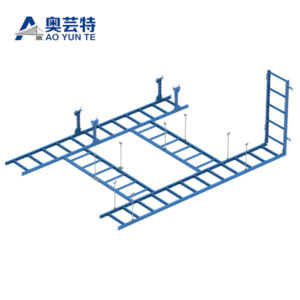
Depending on the system design, it may be produced as a perforated tray, solid-bottom tray, ladder structure, channel, or another engineered configuration. The material does not determine the tray structure by itself. Stainless steel describes what the tray is made from, while the structural form determines how the cables are physically supported.
This distinction is important.
Two stainless cable trays made from similar material can behave differently if one uses deep side rails and an open ladder structure while the other uses a shallow continuous base. Cable load, ventilation, fitting geometry, support span, and maintenance access can therefore differ substantially between the two systems.
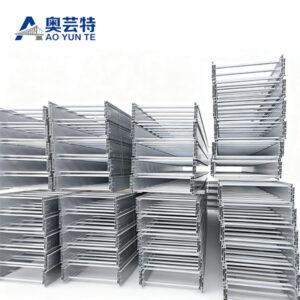
The current stainless steel cable tray range illustrates this relationship between material choice and configurable tray dimensions. The final specification still needs to be matched to the cable route rather than selected from material alone.
Why Stainless Steel Resists Corrosion
The corrosion resistance of stainless steel comes from the behavior of the alloy at its surface.
Stainless steels contain chromium, which allows a very thin passive oxide layer to form when the surface is exposed to oxygen. This protective layer separates the underlying material from the surrounding environment and can reform after minor surface disruption when suitable conditions remain available.
The basic mechanism is explained in the Wikipedia overview of stainless steel, which also makes an important point that is sometimes lost in simplified product descriptions: stainless steel is corrosion resistant, not corrosion proof.
That difference matters when specifying a stainless cable tray.
Moisture alone does not describe an environment well enough. The actual exposure may involve condensation, airborne contaminants, cleaning chemicals, deposits, stagnant moisture, elevated temperatures, or other conditions that influence corrosion behavior.
Crevices also deserve attention. Connections, overlapping components, fasteners, accumulated debris, and areas where moisture remains trapped can experience conditions that are different from the exposed surface of the tray.
For this reason, selecting stainless steel should begin with the environment itself. The question is not simply whether corrosion is present, but what type of exposure the cable tray will experience and how persistent that exposure is likely to be.
Stainless Cable Tray Material Selection
Not all stainless steels have identical properties, so describing a system simply as “stainless” is not enough for a detailed specification.
Different stainless steel grades use different alloy compositions, and these differences affect corrosion behavior, forming characteristics, mechanical properties, and suitability for particular environments. The correct grade should therefore be selected according to the actual service conditions rather than according to a general assumption that a higher grade is always necessary.
For relatively controlled environments, the material requirement may be quite different from a cable route exposed to persistent moisture or chemically aggressive contaminants. A route that appears dry most of the time can also experience condensation inside enclosed spaces or around temperature transitions.
Fabrication conditions should be considered as well. Cutting, drilling, welding, grinding, and contact with unsuitable tools or contaminated surfaces can affect the condition of stainless steel during manufacturing and installation.
This leads to a practical selection principle: material grade, fabrication quality, and installation environment should be evaluated together.
A high-performance material cannot compensate for poor fabrication practices, unsuitable fasteners, trapped contaminants, or a design that creates unnecessary crevices where moisture can remain.
Stainless Cable Tray vs Galvanized Steel
Stainless and galvanized steel cable trays solve corrosion problems in different ways.
A galvanized steel tray relies on a zinc-based protective layer applied to the steel surface. The underlying structural material remains carbon steel, while the coating provides the primary environmental protection.
A stainless cable tray relies on the alloy itself and its passive surface behavior. It does not depend on a separate zinc coating to provide its basic corrosion resistance.
This distinction affects how damage and modification should be considered.
When a coated steel tray is cut, drilled, abraded, or otherwise modified, local surface protection may change. Stainless steel does not have a coating that can simply peel away in the same manner, although inappropriate fabrication or contamination can still reduce its corrosion performance.
Structural considerations are separate from corrosion considerations. A designer should not assume that stainless steel automatically allows longer spans or greater loads. Tray profile, material thickness, forming method, side-rail geometry, joints, supports, and the exact cable load remain important.
The comparison is therefore not a simple choice between “standard” and “better.” Galvanized steel can be suitable in many operating conditions, while stainless steel becomes more attractive when the environmental conditions justify its material characteristics.
Stainless Cable Tray vs Aluminum and Composite Tray
Aluminum and composite cable trays introduce different engineering trade-offs.
Aluminum is considerably lighter than many steel systems, which can be valuable where handling, dead load, or support structure weight is important. It also provides useful corrosion resistance in many environments. However, its structural and environmental behavior differs from stainless steel, so the two should not be compared only by corrosion resistance.
Composite trays take the comparison in another direction. Fiber-reinforced systems can provide strong resistance to many corrosive environments while also being electrically non-metallic. Their weight and structural behavior differ from metallic trays, and manufacturer-specific span and load information becomes particularly important.
A stainless cable tray remains useful where the design requires the combination of metallic construction, structural rigidity, temperature tolerance, durability, and resistance to particular environmental conditions.
The table below summarizes the main decision factors without treating any material as universally superior.
| Material | Corrosion approach | Relative installation weight | Electrical characteristic | Important design consideration |
|---|---|---|---|---|
| Stainless steel | Corrosion resistance comes from the alloy and passive surface | Higher than lightweight alternatives | Conductive | Grade, fabrication, environment and support design |
| Galvanized steel | Zinc-based surface protection | Relatively high | Conductive | Coating condition and environmental exposure |
| Aluminum | Naturally protective oxide surface | Lower | Conductive | Load, alloy, connections and environment |
| Composite | Corrosion-resistant non-metallic material system | Generally low | Usually non-conductive | Resin system, fire performance and support span |
Material choice becomes more reliable when these characteristics are compared against project conditions instead of ranking the materials from best to worst.
How to Choose the Right Stainless Cable Tray Size

Choosing the correct stainless cable tray size starts with the cables, not the tray catalogue.
First establish what will be installed. Cable outside diameter, quantity, weight, grouping, separation requirements, bend radius, and likely future additions determine how much usable space the route needs.
Width provides the lateral space for cable arrangement, but nominal width should not be confused with usable cable capacity. Side structures, dividers, fittings, fasteners, and installation clearances can all affect the space available in practice.
Tray height also matters. A deeper tray can provide greater containment, but it should not be used as justification for uncontrolled cable stacking. Dense cable layers can make lower cables difficult to inspect, identify, remove, or replace.
The cable route itself may determine the final dimensions. A straight section that comfortably accommodates the cable bundle can still become problematic where the tray passes through a restricted opening, changes elevation, or turns through a bend.
A useful sizing process therefore checks the entire route rather than the easiest straight section.
The final dimension should provide sufficient cable space, practical installation access, and realistic future capacity while remaining compatible with structural loading and the available support arrangement.
Load Capacity and Support Span
Corrosion resistance receives most of the attention when stainless cable tray is discussed, but structural behavior is equally important.
The installed tray carries more than its own weight. It also supports cables, fittings, covers where used, accessories, and other loads permitted by the system design. These loads are transferred through the tray to brackets, hangers, crossbeams, or other structural supports.
Support spacing changes how the tray responds to that load.
A tray supported at shorter intervals does not experience the same structural condition as the same tray installed across a longer unsupported distance. Side-rail geometry, material thickness, tray profile, joint arrangement, and cable distribution all influence the result.
Wide trays deserve particular attention because physical capacity and structural capacity are not the same thing. Increasing width creates more room for cables, but that space can eventually carry substantially more cable weight.
The installed cable distribution should also be considered. A relatively even cable arrangement creates a different condition from a route where a large group of heavy cables is concentrated toward one side or around a particular transition.
The existing Aoyunte article on steel cable trays in industrial projects provides additional context on how metal tray construction, cable support, inspection, and industrial operating conditions relate to overall cable management performance.
In practical design, stainless steel should therefore be viewed as the material component of a structural system rather than as the structural rating itself.
Where Stainless Cable Tray Makes the Most Sense
A stainless cable tray becomes particularly relevant where the environment creates a credible reason to move beyond more basic surface protection.
Persistent humidity is one example, but the decision should be more specific than simply describing an area as “wet.” Condensation frequency, drying conditions, contaminants, washdown practices, chemical exposure, temperature changes, and the presence of deposits can all influence corrosion risk.
Industrial processing areas may expose cable management systems to airborne substances or repeated cleaning. Utility spaces can combine moisture with limited ventilation. Outdoor routes may experience recurring wet and dry cycles, deposits, temperature variation, and contamination.
Stainless steel can also make sense where access for future maintenance is difficult. If a cable route will eventually be positioned above equipment, behind infrastructure, or within a service area that is costly to access operationally, material durability may carry greater importance than it would on an easily inspected route.
Visible installations provide another consideration. Stainless steel can maintain a clean, consistent surface appearance without relying on painted finishes, although appearance should remain secondary to environmental and structural requirements.
The strongest applications are therefore those where the material choice solves a defined operating problem rather than simply upgrading the specification without a clear reason.
Fittings and Connections Need the Same Attention as the Tray
A cable tray route is rarely made from straight sections alone.
Horizontal bends, vertical bends, tees, crosses, reducers, connectors, covers, dividers, and support accessories form part of the complete system. When stainless steel is selected for environmental durability, these components should not become overlooked weak points.
Material compatibility is particularly important.
Using a corrosion-resistant tray with unsuitable fasteners or support components can create an inconsistent system. Connections may be exposed to the same moisture, chemicals, or contaminants as the tray itself, and local contact conditions can influence long-term behavior.
The geometry of fittings also affects cable installation. A bend has to accommodate the cable’s required change in direction without forcing the cable against an unsuitable radius. Large and relatively stiff cables often require substantially more space than their straight-run arrangement suggests.
Support positions around fittings deserve additional attention because direction changes alter the route and can change how cable weight is distributed.
This is why specifications should define the cable tray as a coordinated family of straight sections, fittings, connectors, and supports rather than identifying only the material and width of the main tray.
Installation Practices That Protect Stainless Steel Performance
Stainless steel is durable, but careless installation can reduce the benefit of selecting it.
One practical concern is contamination from tools or work surfaces previously used with ordinary steel. Embedded iron-containing particles can create localized surface staining or corrosion that may incorrectly be interpreted as failure of the stainless material itself.
Cut edges, drilled areas, welded locations, and other field modifications should therefore receive appropriate attention. Installation teams should follow the fabrication and surface-treatment recommendations associated with the selected stainless steel and tray system.
Drainage should also be considered. Cable trays should not unintentionally create pockets where contaminated water or debris remains trapped for extended periods. This is particularly relevant around horizontal surfaces, covered sections, overlaps, and complex fittings.
Installation clearances matter for maintenance as well. A highly corrosion-resistant tray offers limited lifecycle advantage if technicians cannot inspect its supports, joints, fasteners, or cable condition.
Cable placement should remain organized rather than using every available space simply because the tray can physically hold another cable. Maintaining a clear and serviceable arrangement makes future inspection more useful and reduces unnecessary disturbance during modifications.
Good installation therefore preserves both sides of stainless cable tray performance: the material properties and the practical accessibility of the cable-management system.
Grounding, Bonding and Electrical Continuity
Because stainless steel is electrically conductive, grounding and bonding requirements may become part of the cable tray design depending on the electrical system and applicable project rules.
It should not be assumed that simply connecting metallic tray sections creates the required electrical continuity.
Joints, fasteners, surface conditions, expansion sections, fittings, and other connections can affect the electrical path through the installed system. Where continuity is required, the complete route should be evaluated according to the applicable electrical design requirements.
This issue becomes particularly important when different materials are connected in one cable-support system.
Transitions between stainless steel and other metals can introduce both electrical and corrosion considerations. The designer should evaluate material compatibility rather than treating every metallic component as interchangeable.
Grounding and bonding should therefore be considered during specification, not added as an afterthought during installation.
Doing so allows connectors, bonding components, supports, expansion provisions, and tray materials to be coordinated before the system reaches the site.
Common Mistakes When Selecting Stainless Cable Tray
A frequent mistake is assuming that stainless steel automatically solves every corrosion problem.
It does not. The selected grade must suit the environment, and tray design, fabrication quality, crevices, deposits, contamination, and maintenance conditions still matter.
Another mistake is specifying stainless steel before understanding the exposure. If the actual environmental conditions are not defined, there is no clear basis for deciding which stainless material is appropriate or whether stainless steel is necessary at all.
Structural capacity can also be misunderstood. Corrosion resistance says nothing by itself about permitted span or cable load. Two stainless cable trays can use different material thicknesses, rail profiles, forming methods, and support configurations, resulting in different structural performance.
Mixing incompatible accessories is another avoidable problem. A stainless tray combined with unsuitable connectors, supports, or fasteners can create weak points in a system that was selected specifically for durability.
Sizing errors remain possible as well. A corrosion-resistant tray can still be too narrow, unnecessarily deep, overloaded, poorly supported, or difficult to access.
Finally, some specifications focus heavily on the initial tray while giving little attention to later system changes. New cables add weight and occupy usable space. Abandoned cables can remain in place for years. Supports may be modified as surrounding equipment changes.
Material durability is most valuable when the entire cable management system is managed with the same long-term perspective.
Maintenance and Long-Term Performance

Stainless cable trays generally require a different maintenance mindset from systems that depend primarily on painted or plated protection.
Inspection should focus on the condition of the complete assembly rather than searching only for obvious surface rust.
Supports and connections should be checked for loosening, deformation, unintended movement, material incompatibility, and contamination. Areas around fittings or overlaps should be examined for trapped debris or persistent moisture.
The cable arrangement also deserves attention. Added cables can increase structural load, reduce ventilation, obstruct inspection, or create congestion around bends. Removing abandoned cables can restore usable capacity without changing the tray itself.
Surface staining should be investigated rather than immediately interpreted as deep material corrosion. Contamination from surrounding work, deposits, cleaning chemicals, or contact with other metals can create visible changes that have different causes.
Where the environment itself changes, the original material decision may need to be reviewed. New processes, different cleaning methods, altered ventilation, increased humidity, or additional contaminants can expose the tray to conditions that were not considered when it was installed.
Long-term performance therefore depends on two things working together: choosing a suitable stainless cable tray at the design stage and maintaining awareness of how the operating environment and cable load change afterward.
Conclusion
A stainless cable tray is most valuable when its material properties solve a specific cable-management challenge.
Its corrosion resistance can provide a strong advantage in demanding environments, but reliable performance still depends on the selected stainless steel grade, tray dimensions, structural design, support spacing, fittings, cable load, installation quality, and environmental conditions.
Compared with galvanized steel, aluminum, or composite systems, stainless steel offers a distinct combination of metallic construction, durability, rigidity, and corrosion resistance. That combination does not make it the automatic choice for every route. It makes it an engineering option that should be matched to the conditions the cable system will actually face.
When material selection begins with the environment and is followed by careful sizing, structural planning, compatible accessories, and appropriate installation practices, a stainless cable tray can provide a stable and maintainable cable route throughout a demanding service life.
FAQ
What is a stainless cable tray used for?
A stainless cable tray supports and organizes electrical, control, communication, and other suitable cables where durable metallic construction and corrosion resistance are important. It can be used in multiple tray structures, with the final design selected according to cable load, environment, routing, and access needs.
Is stainless cable tray completely corrosion proof?
No. Stainless steel is highly corrosion resistant, but its performance depends on alloy grade, contaminants, moisture, temperature, crevices, fabrication, and maintenance conditions. The correct stainless cable tray should be selected according to the actual exposure rather than assuming all stainless grades behave identically.
How do I choose a stainless cable tray size?
Begin with cable outside diameter, quantity, weight, grouping, separation needs, and future additions. Then check tray width, height, fittings, bend geometry, support spacing, and load capacity. The correct size must provide usable cable space without ignoring structural performance or maintenance accessibility.
Is stainless cable tray stronger than galvanized cable tray?
Material name alone does not determine tray strength. Structural performance depends on stainless or galvanized material grade, thickness, rail profile, tray shape, joints, support span, and load distribution. Always compare the load information for the exact tray configuration instead of judging capacity from material alone.
What should be checked when installing stainless cable tray?
Check support positions, alignment, joints, fitting geometry, compatible fasteners, electrical continuity where required, cable bending, drainage, and maintenance clearance. Care should also be taken during cutting or fabrication to avoid surface contamination that could compromise the intended corrosion performance.