-
Xinzhen Town Industrial Zone, Wen'an County, Langfang City, Hebei Province

Composite Cable Trays for Corrosive Environments
Recent News
View Products
Contact Us
Table of Contents
If your facility operates in environments with high humidity, chemical exposure, or marine atmospheres, you know that corrosion is one of the biggest challenges in cable management. Traditional metal cable trays, including galvanized steel, may fail prematurely, leading to frequent maintenance, downtime, and safety risks.
Composite cable trays offer a practical solution for corrosive environments, combining lightweight design, chemical resistance, and long-term reliability. In this guide, we’ll dive into everything you need to know about using composite cable trays in harsh conditions, including materials, installation, fire safety, cost considerations, and real-world applications.
By the end of this article, you will understand how to make the best material choice for your environment, protect your infrastructure, and reduce long-term operational costs.
Understanding Composite Cable Trays
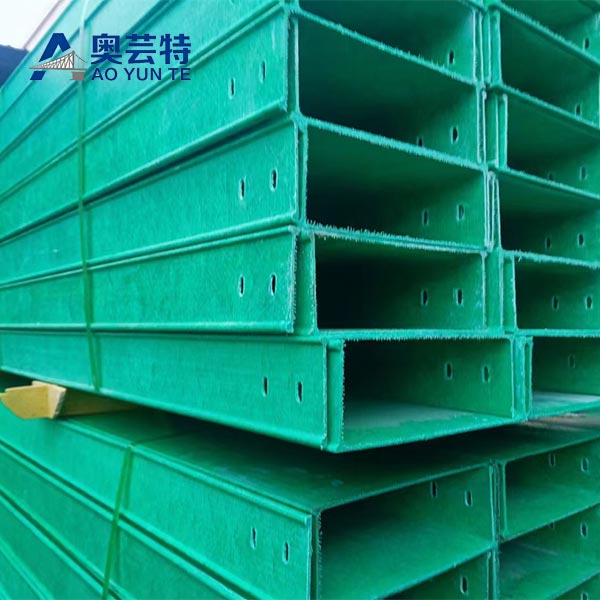
Composite cable trays are typically made from fiber-reinforced plastics,
a combination of glass fibers and resin that provides:
- Exceptional corrosion resistance
- Lightweight construction for easy handling
- Electrical non-conductivity for enhanced safety
- Durability under harsh environmental conditions
Unlike metal trays, composite materials do not rely on surface coatings to prevent corrosion. This inherent resistance makes them ideal for chemically aggressive, wet, or salty environments.
In contrast, galvanized steel cable trays rely on a zinc coating that can wear off over time, leaving the steel exposed to rust.
Composite trays are ideal for harsh or chemically aggressive settings. For a deep dive into performance in specific environments, check our guide on composite cable trays for corrosive environments
Why Corrosive Environments Are Challenging
Corrosion is a common cause of premature failure in cable tray systems. Factors contributing to corrosion include:
- High humidity or condensation
- Salt-laden air in coastal or marine environments
- Exposure to acids, alkalis, or industrial chemicals
- Temperature fluctuations that accelerate material degradation
According to studies on corrosion resistance of composite materials,
Composite trays maintain structural integrity far longer than metal systems in these aggressive conditions.
| Environmental Factor | Effect on Metal Trays | Effect on Composite Trays |
|---|---|---|
| Humidity | Accelerates rust formation | No significant effect |
| Salt exposure | Rapid corrosion if coating fails | Resistant to salt and moisture |
| Chemical exposure | Surface coating can degrade | Material inherently resistant |
| Temperature cycling | Can lead to cracking and coating failure | Maintains dimensional stability |
Corrosion Resistance: Composite vs Galvanized
When evaluating composite vs galvanized cable trays in corrosive conditions, consider:
- Material Longevity
Composite trays can last 20+ years in harsh environments, while galvanized trays often need replacement every 5–10 years once the coating degrades. - Maintenance Needs
Composite systems require minimal inspections, while metal trays require regular checks for rust, coating damage, and potential structural weakness. - Safety Considerations
Corroded metal trays may compromise the cable support structure, increasing the risk of electrical hazards. Composite trays remain structurally sound, reducing this risk. - Installation Impact
Composite trays are lighter, making installation faster and reducing structural load, which is particularly valuable in retrofits or high-ceiling installations.
Corrosion is one of the main challenges in cable management. Learn how these trays perform in real-world harsh conditions in composite cable trays for corrosive environments.
Fire Performance in Corrosive Environments
Fire safety remains critical in any cable management system. Composite cable trays are manufactured using fire-retardant resin systems that limit flame spread and smoke development. While steel does not burn, it can lose structural strength rapidly under high heat, potentially causing cable collapse.
Guidance from fire safety in cable tray systems
suggests that selecting the right material is as much about system behavior under fire as it is about combustibility. Composite trays provide a balance of corrosion resistance and fire-retardant performance suitable for sensitive installations.
| Feature | Composite Trays | Galvanized Steel Trays |
|---|---|---|
| Flame spread | Limited, per resin | Non-combustible, but weakens under heat |
| Smoke generation | Low | Not applicable |
| Structural integrity | Maintains shape during fire | Risk of collapse |
| Electrical conductivity | Non-conductive | Conductive, requires grounding |
Electrical Safety Considerations

Composite trays are electrically non-conductive, which reduces shock risk if cable insulation fails. This simplifies grounding and bonding requirements, particularly in environments with complex or dense cable installations.
For guidelines, refer to cable tray system fundamentals,
which emphasize the importance of material conductivity in electrical safety planning.
Weight and Installation Efficiency
Composite trays are significantly lighter than metal alternatives of similar load rating. This offers multiple advantages:
- Easier handling and reduced labor fatigue
- Faster installation
- Reduced structural support requirements
| Tray Type | Weight per Meter | Ease of Installation | Structural Support Needed |
|---|---|---|---|
| Composite Ladder | 25–50% lighter | Easier | Standard |
| Galvanized Ladder | Heavier | Requires lifting | May need extra reinforcement |
| Composite Solid Bottom | Moderate | Easy | Standard |
| Galvanized Solid Bottom | Heavy | Slower | Reinforcement likely |
Load Capacity and Support Spacing
Composite trays can support substantial loads but must follow manufacturer-recommended support spacing. Over-spanning can cause sagging and reduce service life.
| Tray Material | Max Span | Typical Load Rating | Best Use |
|---|---|---|---|
| Composite | 1.2–2.5 m | Medium–High | Corrosive, lightweight needs |
| Galvanized Steel | 1.5–3 m | High | Heavy loads, dry environments |
Tip: For corrosive areas, prioritize corrosion resistance over maximum load unless structural requirements demand steel.
Case Study: Coastal Facility Upgrade
A coastal wastewater treatment plant had recurring corrosion problems with galvanized cable trays. Rust developed within three years, leading to high maintenance costs and potential safety hazards.
The facility switched critical pathways to composite cable trays:
- Rust and corrosion were eliminated
- Inspections decreased by 70%
- Installation of new sections was faster due to lighter trays
- Overall lifecycle costs decreased significantly
This demonstrates that in corrosive environments, composite trays outperform metal alternatives both operationally and financially.
Material Selection Guidelines
When selecting composite trays for corrosive environments, consider:
- Environmental conditions: humidity, chemicals, salt exposure
- Load requirements: ensure spans and supports meet design loads
- Fire and electrical safety: choose fire-retardant, non-conductive materials
- Installation: lighter trays reduce labor and structural costs
Additional guidance can be found in composite cable tray installation best practices.
Lifecycle Cost Analysis
While composite trays have higher upfront costs, long-term savings in maintenance, replacement, and downtime often make them the more economical choice.
| Cost Factor | Composite | Galvanized Steel |
|---|---|---|
| Initial Purchase | High | Lower |
| Maintenance | Low | Medium–High |
| Replacement Frequency | Rare | Every 5–10 years |
| Downtime Cost | Minimal | Can be significant |
| Total 20-Year Cost | Competitive or lower | Often higher |
A lifecycle cost evaluation, supported by Plant Engineering, confirms that composite trays are financially advantageous in corrosive conditions.
Real-World Installation Tips
- Maintain recommended support spacing to prevent sagging
- Cut composite trays with standard hand tools; no hot work needed
- Avoid exceeding manufacturer load ratings
- Consider UV exposure if outdoors
- Regularly inspect in areas with chemical splashes or high humidity
Common Mistakes to Avoid
- Assuming all composites are equal—check fire ratings and chemical resistance
- Using galvanized steel without considering environmental corrosion
- Overloading or over-spanning trays
- Ignoring proper installation support spacing
Need Expert Guidance on Composite Cable Trays for Corrosive Areas?
Choosing the right cable tray is critical for safety, long-term performance, and cost efficiency. If your facility operates in corrosive environments, our experts can help evaluate your needs, recommend the best materials, and provide installation guidance.
Contact us today to get a tailored solution, reduce maintenance risks, and ensure your cable management system performs reliably for years.
FAQ
Can composite cable trays handle outdoor salt-laden air?
Yes, composites are highly resistant to corrosion in marine or coastal environments.
Do composite cable trays need grounding?
No, their non-conductive properties reduce grounding requirements.
Are composite cable trays more expensive than galvanized?
Typically upfront cost is higher, but total lifecycle costs are often lower.
How long docomposite cable trays last in corrosive environments?
20+ years, depending on design and environmental conditions.
Can composite trays be used with heavy power cables?
Yes, if manufacturer load ratings and span specifications are followed.