-
Xinzhen Town Industrial Zone, Wen'an County, Langfang City, Hebei Province

Composite Cable Trays: A Practical Solution for Demanding Environments
Recent News
View Products
Contact Us
Table of Contents
When you design or upgrade a cable management system, material selection often determines how the system performs not just at installation, but over its entire service life. Many users only realize this after facing corrosion, repeated maintenance, or safety concerns caused by traditional metal cable trays.
Composite cable trays are increasingly specified in environments where long-term reliability matters more than initial cost. They are not a universal replacement for steel or aluminum systems, but in the right conditions, they solve problems that metal trays struggle to address. This article explores composite cable trays from a user-focused and engineering-oriented perspective, helping you decide when they are the right choice and how to use them effectively.
Understanding Composite Cable Tray Materials

Composite cable trays are typically manufactured from fiber-reinforced plastics.
These materials combine glass fibers with resin systems to create a structure that balances strength, rigidity, and environmental resistance.
Unlike metal trays, composite trays do not rely on galvanizing, painting, or surface coatings for protection. Their resistance to corrosion, moisture, and many chemicals is inherent to the material itself. This distinction is critical in environments where surface damage, chemical exposure, or humidity can rapidly compromise metal systems.
From a user’s standpoint, this means fewer hidden failure points and more predictable long-term performance.
Why Corrosion Is the Primary Driver Behind Composite Tray Adoption
Corrosion remains the most common cause of premature cable tray failure. Even high-quality metal trays eventually degrade once protective layers are damaged during installation or operation.
Research into the corrosion resistance of composite materials
shows that fiber-reinforced polymers retain structural integrity in environments that aggressively attack steel and aluminum. Because composite materials do not oxidize, they avoid the gradual weakening that often goes unnoticed until failure occurs.
For facilities where inspections are difficult, downtime is costly, or access is limited, corrosion resistance becomes more than a convenience—it becomes a risk management strategy.
Composite trays are inherently resistant to rust and chemical damage. For a broader overview of tray types, structural advantages, and design considerations, refer to Composite Cable Trays: A Practical Solution for Demanding Environments
Electrical Safety Advantages You Should Not Overlook
Composite cable trays are electrically non-conductive. This characteristic significantly reduces the risk of electrical shock if cable insulation fails or deteriorates over time.
In metal tray systems, grounding and bonding are essential safety measures. Composite trays simplify this aspect of system design by eliminating the tray as a potential conductive path. This approach aligns with established cable tray system fundamentals.
where material conductivity directly affects electrical safety planning.
From an operational perspective, this adds an extra layer of protection for maintenance personnel and reduces complexity in safety audits.
Weight Reduction and Structural Impact

One of the most practical benefits of composite cable trays is their reduced weight compared to steel systems. Even when load ratings are comparable, composite trays often weigh significantly less.
This weight reduction affects projects in several ways:
- Easier handling during installation
- Reduced labor fatigue
- Lower demand on lifting equipment
- Less stress on building structures
In retrofit projects or facilities with limited load capacity, composite trays can eliminate the need for costly structural reinforcement.
Fire Performance: A Balanced View
Fire performance is often misunderstood when discussing composite materials. Modern composite cable trays are manufactured using fire-retardant resin systems designed to limit flame spread and smoke development.
While steel does not burn, it can lose strength rapidly at elevated temperatures. Composite materials behave differently, and understanding this behavior is essential. Guidance on
fire safety in cable tray systems emphasizes that material choice must align with overall fire protection strategy, cable type, and risk assessment rather than assumptions alone.
For users, this means evaluating fire performance as part of a system, not as an isolated material property.
Common Composite Cable Tray Configurations
Composite cable trays are available in multiple designs, allowing you to match tray structure to cable type and routing requirements.
| Tray Type | Structural Design | Typical Application |
|---|---|---|
| Composite Ladder Tray | Open rungs, high ventilation | Power and heavy cables |
| Composite Solid Bottom Tray | Continuous support surface | Control and signal cables |
| Composite Perforated Tray | Ventilated base | Mixed cable systems |
| Composite Channel Tray | Narrow profile | Instrumentation wiring |
Selecting the correct configuration is just as important as selecting the material itself.
Case Insight: Solving a Long-Term Maintenance Problem
In one long-term facility upgrade, metal cable trays experienced repeated corrosion due to constant moisture and airborne contaminants. Despite regular inspections, coating damage and rust appeared within a few years.
By replacing critical routes with composite cable trays:
- Corrosion-related failures were eliminated
- Maintenance inspections were reduced
- Installation time decreased due to lighter components
- Long-term operational costs dropped
Years after installation, the composite trays continued to perform without visible degradation, demonstrating the value of material-driven durability.
Installation Considerations That Matter in Practice
Although composite cable trays follow familiar installation principles, there are important differences compared to metal systems.
Composite trays can often be cut on site using standard tools, eliminating the need for hot work. However, support spacing must strictly follow manufacturer load tables. Composite materials are strong but respond differently to over-spanning.
Many traditional cable tray installation practices
still apply, but assumptions based on steel systems should be reviewed carefully.
Load Capacity and Structural Behavior
Composite cable trays can support substantial loads when designed correctly, but understanding their behavior is essential.
| Material | Load Capacity | Corrosion Resistance | Weight |
|---|---|---|---|
| Steel | Very high | Moderate | Heavy |
| Aluminum | Medium | Good | Medium |
| Composite | Medium to high | Excellent | Light |
Composite trays are not intended to replace steel in extreme load scenarios, but they excel where corrosion resistance and weight reduction are priorities.
Lifecycle Cost: Looking Beyond Initial Price
Initial purchase price rarely tells the full story. When evaluated through lifecycle cost analysis for cable management,
Composite cable trays often deliver lower total ownership costs in corrosive or high-maintenance environments.
Reduced inspections, fewer replacements, and longer service life all contribute to improved long-term value.
When Composite Cable Trays Are the Right Choice
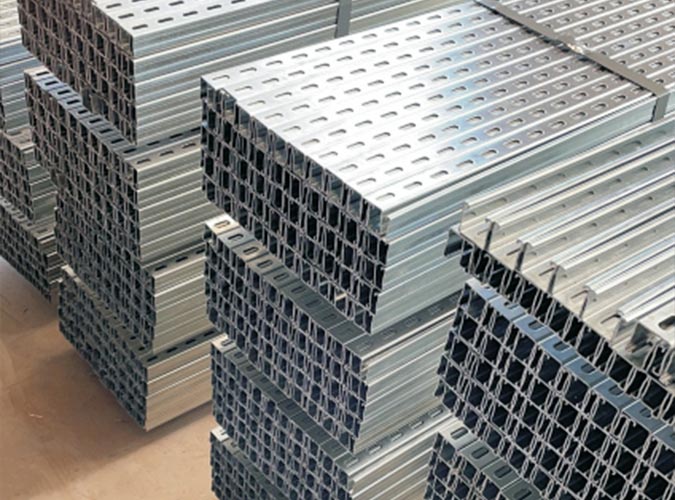
Composite cable trays are particularly well suited for:
- High-humidity environments
- Chemical exposure areas
- Wastewater and treatment facilities
- Coastal or corrosive atmospheres
- Safety-critical installations
- Retrofit projects with weight limitations
They may not be ideal for every application, but in the right conditions, they outperform traditional materials consistently.
Common Mistakes to Avoid
Before specifying composite cable trays, avoid these common pitfalls:
- Treating all composite materials as equivalent
- Ignoring fire performance requirements
- Exceeding recommended support spacing
- Applying steel design assumptions to composite systems
- Focusing solely on upfront cost
Final Perspective
Composite cable trays are not a trend; they are a practical response to real-world challenges. If corrosion resistance, safety, and long-term reliability are critical to your project, composite trays deserve serious consideration.
By focusing on actual operating conditions instead of tradition or initial cost, you can select a cable management system that performs reliably for years to come.
FAQ
Are composite cable trays stronger than steel?
They are strong but optimized differently. Steel excels in extreme load scenarios, while composite trays excel in corrosion resistance and weight efficiency.
Do composite cable trays require grounding?
No. Composite trays are non-conductive, reducing grounding complexity.
Can composite cable trays be used outdoors?
Yes. They perform well in outdoor and corrosive environments.
How long do composite cable trays last?
In harsh environments, they often outlast metal trays due to inherent material stability.
Are composite trays difficult to install?
Most installers find them easier to handle due to reduced weight and simpler cutting.
Need Help Selecting the Right Composite Cable Tray?
Choosing composite cable trays isn’t just about material—it’s about matching real operating conditions, load requirements, and long-term performance expectations. If you’re evaluating options for a corrosive, high-risk, or maintenance-sensitive environment, getting the specification right from the start can save years of cost and rework.
Our team works closely with engineers, contractors, and project managers to help define practical cable tray solutions based on real-world applications—not assumptions.
Contact us today to discuss your project requirements, get technical guidance, or request a tailored recommendation. The right decision now can make your cable management system safer, more durable, and easier to maintain for years to come.