-
Xinzhen Town Industrial Zone, Wen'an County, Langfang City, Hebei Province

How to Choose Cheap Cable Tray Without Sacrificing Quality
Recent News
View Products
Contact Us
Table of Contents
When you’re setting up a wiring infrastructure—whether for a factory, office park, warehouse, or mechanical room—choosing the right cable tray solution often becomes one of those decisions that feels simple until it’s too late. You might be tempted by the term cheap cable tray, but that doesn’t mean you should settle on the lowest price alone. What you really want is cost‑effective cable management—inexpensive upfront yet reliable, compliant, and durable in real use.
In this complete guide, we’ll walk you through how to select affordable cable trays smartly—what materials, designs, and manufacturing considerations matter most—and how you can avoid the common pitfalls of choosing trays solely on price. You’ll also find practical case examples, comparison tables, and helpful FAQs so that you come away with a blueprint for making the right choice, not just the cheapest one.
Understanding What “Cheap Cable Tray” Actually Means

At face value, cheap cable trays are simply low‑priced products—but pricing alone isn’t a reliable indicator of quality or long‑term value. When you’re shopping around, you’ll see price influenced by factors such as:
- Material choice (plastic vs. steel vs. aluminum)
- Manufacturing process and finish
- Tray size and load capacity
- Supplier reliability
- Compliance with standards
A “cheap cable tray” in one product listing might be low‑cost because it’s thin, poorly finished, or made with substandard materials. A genuinely affordable tray delivers value — stable performance at a lower cost when compared to alternatives over the lifecycle of the installation.
Why Material Choice Matters for Affordable Cable Management
To understand cheap cable trays better, you need to know how material choice impacts cost, performance, and longevity. Here’s a material comparison to help:
| Material | Typical Cost Range | Strength | Corrosion Resistance | Best Use Case |
|---|---|---|---|---|
| PVC / Plastic | Low | Low | Excellent indoors | Light cabling, indoor use |
| Aluminum | Medium | Medium to High | Good | Medium‑load zones |
| Galvanized Steel | Medium to High | High | Good | Heavy industrial |
| Stainless Steel | High | Very High | Excellent | Harsh / corrosive environments |
For example, PVC cable trays are inexpensive and resist moisture — but they don’t support heavy cable bundles or high‑stress environments. If your project has modest cable loads and is indoors, PVC or low‑gauge aluminum could be a genuinely cheap, functional option.
On the other hand, galvanized steel offers significant improvements in strength and lifespan, and although not always the least expensive, its lifecycle cost may actually be lower due to fewer replacements.
Learn more about standard cable tray materials and their pros/cons in this comprehensive cable tray overview.
Cable Tray Designs That Can Save You Money
Not all cable trays are the same. Choosing the right design based on your application helps you buy economically by avoiding unnecessary features.
Here are common designs and their relative cost considerations:
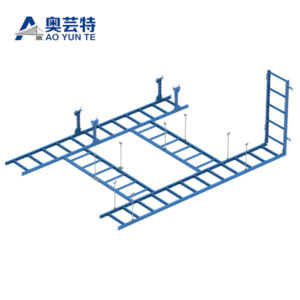
Ladder Cable Trays
- Best for: Heavy‑load power cables
- Cost estimate: Moderate
- Pros: Strong, easy to install
- Cons: Higher material cost
Wire Mesh Cable Trays
- Best for: Data centers, light cabling
- Cost estimate: Low to moderate
- Pros: Excellent ventilation, easy access
- Cons: Lower load capacity than ladder trays
Perforated Cable Trays
- Best for: General purpose
- Cost estimate: Moderate
- Pros: Good airflow, budget‑friendly
- Cons: Less load capacity than ladder design
Solid Bottom Cable Trays
- Best for: Dust‑sensitive environments
- Cost estimate: Variable
- Pros: Cable protection
- Cons: Higher material and installation time
In many projects, wire mesh cable trays offer the best combination of affordability and performance — particularly when cable loads are moderate and ventilation is important. You can compare these options more in a cable tray type chart here.
How to Evaluate Cable Tray Strength on a Budget

One of the most common mistakes buyers make when chasing cheap cable trays is ignoring load capacity. A tray that fails under load does more damage than its price might justify — leading to rework, downtime, and unexpected costs.
When assessing strength:
- Check tray gauge thickness (lower gauge = thicker steel)
- Review load tables that show maximum allowable load per meter
- Match tray strength to cable weight and expected future expansion
Here’s an example structural load table for typical cable trays:
| Tray Type | Gauge Thickness (mm) | Load Capacity (kg/m) | Recommended Support Spacing (m) |
|---|---|---|---|
| PVC Tray | 2.0 | 30–60 | 0.5–1.0 |
| Aluminum Mesh | 1.5 | 50–120 | 1.0–1.5 |
| Galvanized Steel Ladder | 2.5 | 120–300 | 1.5–2.5 |
| Perforated Steel | 2.0 | 80–200 | 1.0–2.0 |
You’ll see that galvanized steel ladder trays handle the highest loads — which may justify a slightly higher upfront cost if your installation requires it.
For detailed cable tray load examples and spacing guidelines, visit this engineering reference on cable tray load capacities.
Case Study: Large Warehouse Installation on a Budget
To illustrate how you can choose cheap cable trays wisely, consider this practical scenario:
Background
A logistics warehouse needed to install an overhead cable tray system to support both power and data cables for lighting, sensors, and automated sorting equipment.
Constraints
- Moderate installation budget
- Mixed cable loads (light data + medium power)
- High ceilings and long spans
- Exposure to occasional moisture
Solution Strategy
- Design Mix:
- Used wire mesh cable trays in areas with data cables and moderate loads
- Used galvanized steel ladder trays for heavy power cable sections
- Support Optimization:
- Increased support spacing to recommended intervals, reducing hardware costs without compromising safety
- Material Grade Selection:
- Selected aluminum mesh trays for areas with minimal corrosive risk to reduce costs
- Selected hot‑dip galvanized trays near moisture exposure areas for long‑term protection
Outcome
- Project came in 12% under budget
- Zero tray failures or cable sag issues after 18 months of operation
- Improved airflow reduced heat buildup around data cables
This case highlights that smart selection — not just lowest price — leads to better performance and lower lifetime costs.
Installation Best Practices to Avoid Costly Mistakes
Even if you choose cheap cable trays, poor installation can quickly erase any savings. Here are practical steps to keep installation sound and cost‑effective:
Plan Your Tray Routes in Advance
Mapping out routes helps minimize unnecessary bends and reduces material waste.
Use Proper Supports
Correct hanger and bracket spacing ensures trays don’t sag — which prevents cable damage.
Choose Weather‑Appropriate Hardware
If your site sees moisture or dust, pick corrosion‑resistant hardware even if trays are inexpensive.
Label and Document
Future maintenance is cheaper when cable runs are labeled and routed logically.
For a more detailed look at installation techniques that save cost and time, this cable tray installation guide is an excellent resource.
omparing Total Cost of Ownership (TCO), Not Just Initial Price
When evaluating cheap cable trays, ask yourself:
- What is the expected service life?
- How often will replacements or maintenance be required?
- Does the tray design support future expansion?
- Are installation costs fully accounted for?
Here’s an illustration of estimated Total Cost of Ownership over 5 years:
| Tray Type | Initial Cost | Maintenance Cost | Replacement Cost | Total 5‑Year Cost |
|---|---|---|---|---|
| PVC Tray | Low | Medium | High | Medium |
| Aluminum Mesh | Medium | Low | Low | Low |
| Galvanized Steel Ladder | Medium‑High | Very Low | Very Low | Low |
| Perforated Steel | Medium | Low | Low | Medium |
As shown above, some “cheap” trays may cost more over time if they require frequent replacement or maintenance.
For deeper analysis on cable tray economics, this industry cost model provides useful benchmarks.
Avoiding Common Pitfalls When Choosing Cheap Cable Trays
Here are common traps worth watching:
Overemphasis on Price Alone
Lowest bid doesn’t always mean best value.
Ignoring Load and Support Requirements
Buyers sometimes pick trays that look cheap without checking if they can actually support cable weight.
Skipping Compliance Checks
Your local electrical code or building standards may require trays to meet specific safety classifications — always verify.
Underestimating Future Cable Needs
Buy trays with some excess capacity to avoid costly future expansions.
When in doubt, consult a professional or use a reputable cable tray selection tool to verify specifications.
Safety Standards and Compliance You Should Know
Cable trays must frequently comply with industry standards such as NEMA VE 1 and IEC 61537 for performance, load, and fire safety. Meeting recognized standards ensures your installation is safer and more trustworthy for prolonged operation.
For more on standard compliance and guidelines, review this cable tray standards summary.
Final Recommendations: Balancing Price and Performance
Choosing a cheap cable tray doesn’t have to mean sacrificing durability or performance. The key is to make affordable choices that still meet your application’s functional needs.
Here’s a quick decision checklist to use before buying:
✔ Match tray design to cable type and load
✔ Ensure proper material for environmental conditions
✔ Check load capacity and support spacing
✔ Consider total cost of ownership, not just sticker price
✔ Plan for future cable additions
✔ Verify compliance with relevant standards
By combining intelligent material choice, thoughtful design planning, and disciplined installation practices, you can achieve a cable management system that is both budget‑friendly and long‑lasting.
If you’d like personalized guidance for your specific installation needs, we’re happy to help — contact us anytime!
FAQ
Are cheap cable trays reliable?
Yes — if chosen based on application needs, material properties, and proper installation. Price alone doesn’t determine reliability.
Can cheap cable trays handle heavy cables?
It depends on material and design. Wire mesh trays are best for light‑to‑medium loads; galvanized ladder trays are better for heavy loads.
Do cheap cable trays rust easily?
Plastic and PVC don’t rust, but steel trays must be galvanized or coated to resist corrosion.
Can I mix different tray types in one installation?
Absolutely — many projects use wire mesh for data cables and ladder trays for power cables.
What’s the typical lifespan of cheap cable trays?
A well‑chosen tray system can last 10–20+ years, depending on environment and load.
Are cheap trays suitable for outdoor use?
They can be — especially if corrosion‑resistant materials like aluminum or hot‑dip galvanized steel are used.
How do I know if a cheap cable tray meets safety standards?
Always check compliance with recognized codes like IEC or NEMA and ask for test documentation from suppliers.